Diabetic Retinopathy: Early Signs You Should NOT Ignore (Complete Guide)
The Scary Truth
Diabetic retinopathy is the leading cause of blindness in working-age adults.
If you have diabetes, your eyes are at risk.
The good news: It’s preventable and treatable if caught early.
The bad news: Many people don’t realize they have it until significant damage has occurred.
This guide explains everything you need to know to catch it early and protect your vision.
What is Diabetic Retinopathy?
Simple Definition:
Diabetic retinopathy is eye damage caused by high blood sugar levels.
High blood sugar damages small blood vessels in the retina (the light-sensitive tissue at the back of your eye). As these vessels weaken or leak, they can damage vision.
How Diabetes Damages Eyes:
- High blood sugar damages blood vessel walls
- Vessels weaken and become fragile
- Vessels leak fluid or bleed
- Retina swells (macular edema)
- Vision becomes blurry then decreases
- Untreated: Blindness occurs
Key Fact:
Diabetic retinopathy has NO EARLY SYMPTOMS. You can have significant damage without feeling anything.
This is why regular eye exams for diabetics are critical.
Who is at Risk?
Very High Risk:
- Type 1 diabetes (diagnosed as child/young adult)
- Type 2 diabetes with poor blood sugar control
- Diabetes for 10+ years
- High blood pressure
- High cholesterol
- Pregnancy (gestational diabetes)
Stages of Diabetic Retinopathy
Stage 1: NONPROLIFERATIVE (Early Stage)
What’s happening:
- Tiny blood vessels start leaking
- Small hemorrhages (bleeding) occur
- Vessel walls thicken
- No symptoms yet
What you feel: Nothing—this is the danger!
What your eye doctor sees:
- Microaneurysms (tiny bulges in vessels)
- Microhemorrhages (small bleeds)
- Hard exudates (lipid deposits)
Can you see it? No. Requires special imaging.
Treatment: Usually monitoring only. Tight blood sugar control can stop progression.
Stage 2: MODERATE NONPROLIFERATIVE
What’s happening:
- More vessels damaged
- Blood vessel blockages increase
- Larger areas of retina affected
- Circulation problems develop
What you feel: Possibly nothing still. Maybe slight blur.
What your eye doctor sees:
- Increased hemorrhages
- Cotton wool spots
- Larger areas of vessel blockage
- Possible early macular edema
Treatment: Regular monitoring, strict blood sugar control, possible laser if edema develops.
Stage 3: SEVERE NONPROLIFERATIVE
What’s happening:
- Significant blood vessel blockages
- Large retinal areas have poor circulation
- Risk of progression to proliferative stage increases significantly
What you feel: Possible blurry vision, floaters
What your eye doctor sees:
- Extensive hemorrhages and exudates
- Multiple areas of blocked vessels
- Risk of vessel growth (proliferation)
Treatment: Urgent intervention needed. Possible laser treatment or injections.
Stage 4: PROLIFERATIVE RETINOPATHY (Severe)
What’s happening:
- New abnormal blood vessels grow (proliferation)
- These vessels are fragile and bleed easily
- Scar tissue develops
- Retina can detach
- Vision loss becomes significant
What you feel:
- Floaters (blood in vitreous)
- Sudden dark spots
- Flashing lights
- Blurred vision
- Possible vision loss
What your eye doctor sees:
- New vessel growth
- Active bleeding
- Scar tissue
- Possible retinal detachment
Treatment: Urgent laser surgery or anti-VEGF injections. Possibly vitrectomy (remove vitreous gel).
Macular Edema (Serious Complication)
What It Is:
Fluid accumulates in the macula (center of retina where vision is sharpest).
This can occur at ANY stage but is most serious because it directly affects vision.
Symptoms:
- Blurred vision
- Fluctuating vision
- Difficulty reading
- Difficulty recognizing faces
- Straight lines appear wavy
Treatment:
- Anti-VEGF injections (bevacizumab, ranibizumab)
- Laser photocoagulation
- Steroid injections
- Vitrectomy if severe
Early Warning Signs (Most People Miss These)
Signs You Should NOT Ignore:
🚨 Floaters — Spots or lines drifting in vision
🚨 Flashes — Bright flashes of light, especially in peripheral vision
🚨 Blurred vision — Everything seems slightly out of focus
🚨 Fluctuating vision — Vision changes throughout the day
🚨 Dark spots — Sudden dark areas in vision
🚨 Difficulty reading — Harder to focus on words
🚨 Color changes — Colors seem less vibrant
🚨 Blank areas — Empty spots in your field of vision
Important:
These signs don’t always mean retinopathy, but with diabetes = see an eye doctor immediately.
Why Early Detection is Critical
Early Stage Retinopathy:
- Often reversible with blood sugar control
- Caught before significant damage
- Vision can be preserved
Late Stage Retinopathy:
- Difficult to treat
- Permanent vision loss likely
- Risk of blindness high
- Treatment more invasive
Getting eye exams = the difference between preserved and lost vision.
Prevention: The Most Important Strategy
1. Control Blood Sugar
This is the #1 defense.
Target: HbA1c < 7% (your doctor will advise your specific target)
2. Manage Blood Pressure
High blood pressure speeds retinopathy development.
Target: Less than 130/80 mmHg
3. Manage Cholesterol
High cholesterol contributes to vessel damage.
Target: Follow your doctor’s recommendations
4. Regular Eye Exams
Absolutely non-negotiable.
Frequency:
- Type 1 diabetes: Every year (or more if issues detected)
- Type 2 diabetes: Every 1-2 years
- Pregnant with gestational diabetes: Every trimester + 1 year postpartum
5. Healthy Lifestyle
- Regular exercise (30 minutes daily)
- Healthy diet (low sugar, low sodium)
- Don’t smoke (major risk factor)
- Manage stress
- Maintain healthy weight
6. Medication Compliance
Take all diabetes medications exactly as prescribed.
Treatment Options by Stage
Nonproliferative (Stages 1-3):
Option 1: Observation + Tight Control
- Regular monitoring
- Strict blood sugar management
- Repeat exams every 3-6 months
- Effective if caught early
Option 2: Laser Photocoagulation
- If macular edema develops
- Laser seals leaking vessels
- Prevents further damage
- Outpatient procedure
Option 3: Anti-VEGF Injections
- Bevacizumab, Ranibizumab, Aflibercept
- Reduce vessel abnormalities
- Reduce swelling
- Monthly injections for several months
- Very effective for macular edema
Proliferative Retinopathy (Stage 4):
Option 1: Panretinal Photocoagulation (PRP)
- Extensive laser treatment
- Destroys abnormal vessels
- Prevents further growth
- Reduces bleeding risk
- Multiple sessions needed
Option 2: Anti-VEGF Injections
- Combined with laser often
- Reduces abnormal vessel growth
- Reduces bleeding
Option 3: Vitrectomy
- Surgical removal of vitreous gel (if severe bleeding)
- Allows laser treatment to work better
- More invasive
- Usually for vision-threatening cases
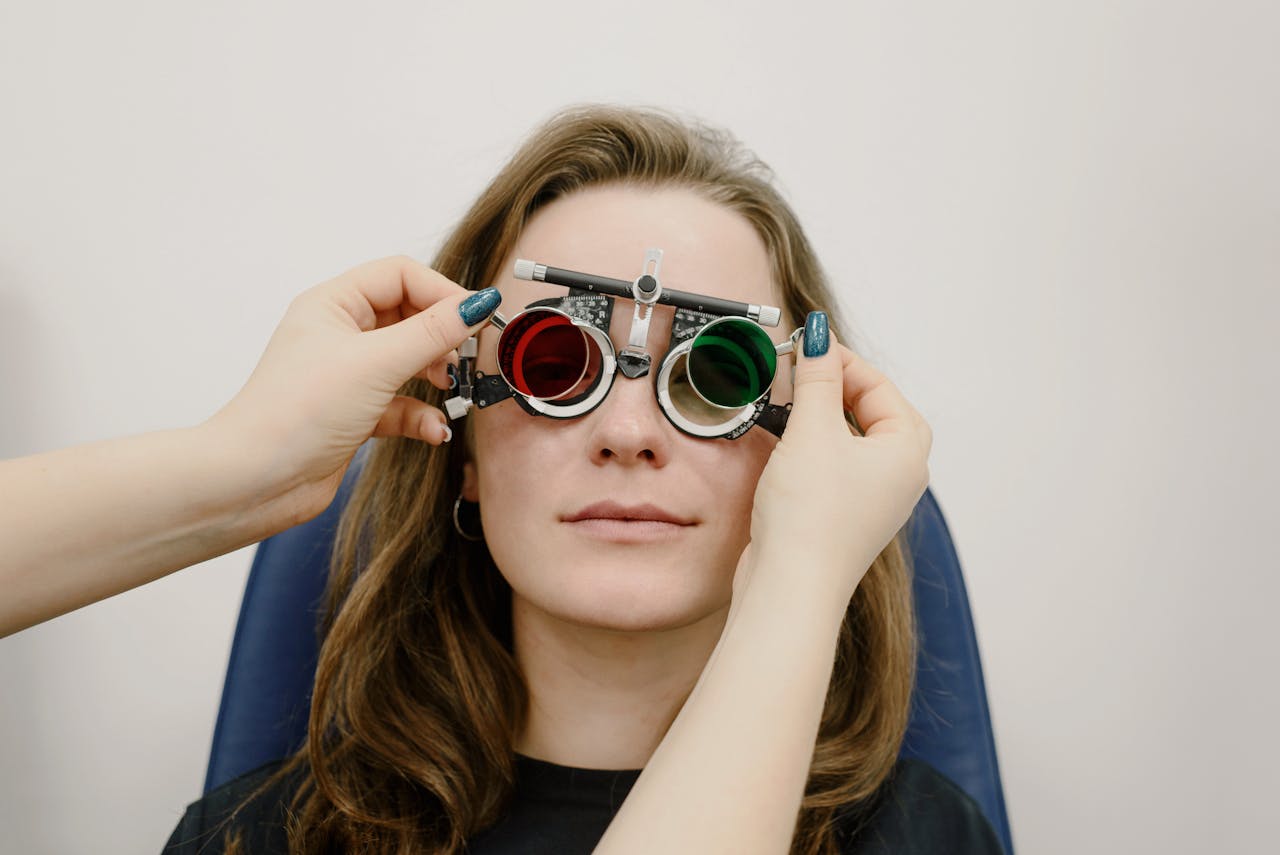
What to Expect at Your Diabetic Eye Exam
Comprehensive Diabetic Retinopathy Exam Includes:
- Vision testing — How clearly you see
- Pupil dilation — Drops widen pupil for retinal view
- Dilated fundus exam — Doctor sees retina thoroughly
- Optical Coherence Tomography (OCT) — 3D imaging of retina
- Fundus photography — Photographs of retina for comparison
- Tonometry — Measure eye pressure (diabetes increases glaucoma risk)
Entire exam takes 30-45 minutes.
Real Questions People Ask
Q: I have diabetes but feel fine. Do I really need an eye exam every year?
A: Yes. This is THE most critical part of diabetes management. Retinopathy has NO early symptoms. By the time you feel something wrong, significant damage may have occurred.
Q: What if my blood sugar is well-controlled?
A: Even well-controlled diabetes can develop retinopathy, just more slowly. Annual exams are still essential.
Q: I had retinopathy but got laser treatment and it’s stable. Am I cured?
A: No, laser doesn’t cure retinopathy—it prevents further damage. You need ongoing monitoring because it can progress again.
Q: Can retinopathy reverse?
A: Early-stage retinopathy can improve with excellent blood sugar control (rare but possible). Most cases don’t reverse, but progression can stop.
Q: What’s the success rate of treatment?
A: 95% of vision loss from diabetic retinopathy is preventable with:
- Early detection
- Prompt treatment
- Ongoing blood sugar control
But only if caught early.
Red Flags: Go to ER Immediately
🚨 Sudden vision loss — Call 911
🚨 Sudden floaters with pain — Go to ER
🚨 Sudden dark spots or blank areas — Go to ER
🚨 Sudden flashing lights — Go to ER
🚨 Eye pain — Go to ER
These can indicate severe bleeding, retinal detachment, or acute complications.
Conclusion
Diabetic retinopathy is serious, but it’s preventable and treatable.
The key is:
- Tight blood sugar control (most important)
- Annual eye exams (mandatory)
- Early detection (game-changer)
- Prompt treatment (if needed)
If you have diabetes, see an eye doctor immediately if you haven’t been checked recently.
Don’t wait for symptoms. Damage happens silently.
Have diabetes and wondering about your eye health? Schedule an eye exam with your optometrist today. Early detection literally saves vision.