

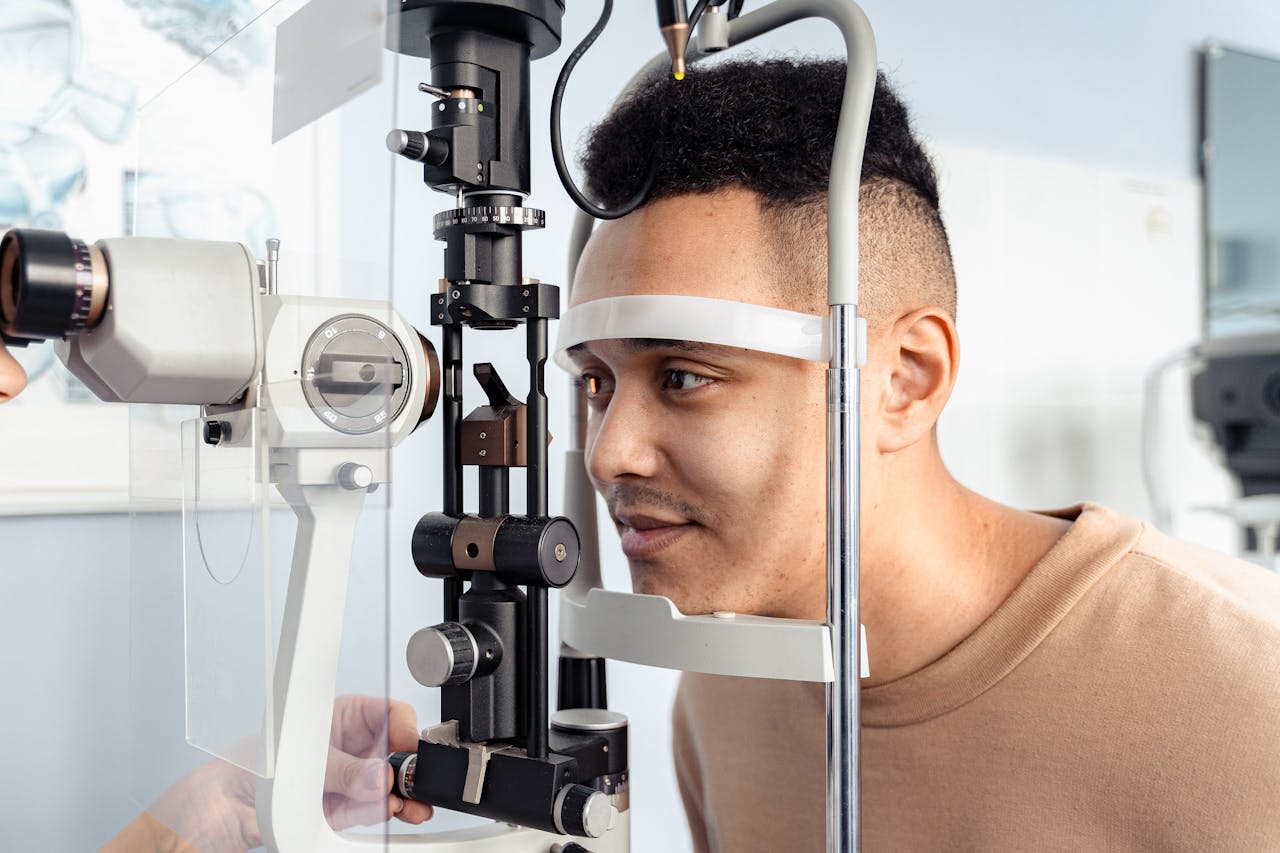
Why You Need an Eye Exam Every Year (Even If You See Perfectly)
The Common Excuse
“My vision is perfect. Why do I need an eye exam?”
I hear this constantly. It’s the most dangerous eye health myth.
Here’s the reality: Many serious eye diseases have ZERO symptoms until permanent vision loss occurs.
You could be losing vision without noticing. By the time you realize something’s wrong, it might be too late.
Silent Eye Diseases (No Symptoms Until Damage is Done)
1. GLAUCOMA — The Vision Thief
What it is: Increased eye pressure damages the optic nerve.
The scary part: 50% of people don’t know they have it.
Symptoms: NONE in early stages. You don’t feel anything.
When you notice: Often too late—significant vision loss already occurred.
What happens: Gradual side vision loss → gradually worsens → central vision loss → blindness.
Can it be reversed? No. Damage is permanent.
Can it be prevented? YES—if caught early!
2. DIABETIC RETINOPATHY — Silent Killer for Diabetics
What it is: High blood sugar damages retinal blood vessels.
Symptoms: NONE initially. You feel completely fine.
When symptoms appear: Only after significant damage.
Scary fact: 30% of diabetics have retinopathy but don’t know it.
3. AGE-RELATED MACULAR DEGENERATION (AMD) — Stealth Vision Loss
What it is: Central retina degenerates, causing central vision loss.
Symptoms: None until damage is significant.
Who’s at risk: Age 50+, family history, smoking, high cholesterol.
When caught early: Can be slowed or stopped.
4. CATARACTS — The Slow Blur
What it is: Lens cloudiness that gradually reduces vision.
Symptoms: Very gradual blur (you might not notice day-to-day).
When you notice: Often after significant cloudiness.
Can be treated? Yes—surgery works well.
5. DRY EYE DISEASE — The Increasing Problem
What it is: Insufficient tear production damages cornea.
Symptoms: Ironically, watery eyes (reflex tearing) or no symptoms.
Who gets it: Computer users, contact lens wearers, age 50+, autoimmune disease.
Impact: Discomfort, vision issues, corneal damage if untreated.
What Your Eye Exam Actually Screens For
The Big Things (Disease Detection):
- Glaucoma screening — Eye pressure + optic nerve imaging
- Retinal diseases — Diabetic retinopathy, macular degeneration, retinal tears
- Cataracts — Lens cloudiness
- Dry eye disease — Tear production + surface damage
- High blood pressure — Visible in blood vessel changes
- Diabetes — Visible in retinal changes
- High cholesterol — Visible in retinal deposits
- Autoimmune diseases — Various retinal/anterior segment signs
- Brain tumors — Papilledema (optic nerve swelling from pressure)
- Stroke risk — Carotid artery blockage visible in retinal vessels
The Smaller Things (Quality of Life):
- Prescription changes — Do you need new glasses?
- Eye muscle balance — Are your eyes working together?
- Eye alignment — Lazy eye, strabismus
- Color blindness — Especially if new
- Contrast sensitivity — Can you see in dim lighting?
Eye Exams Find Health Problems BEFORE Symptoms
Real Examples:
Patient 1: Discovered Diabetes
- Came for “blurry vision”
- Dilated exam showed retinal signs of diabetes
- Hadn’t been diagnosed with diabetes yet
- Started treatment before complications
- Vision saved
Patient 2: Early Glaucoma Detection
- “Just routine exam, eyes feel fine”
- Eye pressure elevated + optic nerve changes detected
- Started eye drops to prevent progression
- Regular monitoring prevented blindness
- 10 years later: still seeing normally
Patient 3: Caught Retinal Tear Before Detachment
- No symptoms
- Routine exam found suspicious area
- Laser treatment immediately
- Prevented retinal detachment
- Vision preserved
The Numbers: Why Annual Exams Matter
Glaucoma:
- Before screening: 7-8% unaware they have it
- After screening discovered: 95% can maintain vision with early treatment
- If caught late: 50% lose significant vision
Diabetic Retinopathy:
- Early detection: 95% preventable vision loss
- Late detection: 30% irreversible vision loss
- Untreated: 25% risk of blindness
Cataracts:
- Early: Monitor and plan surgery timing
- Late: Vision significantly reduced, harder to treat
What Happens During a Complete Eye Exam
Part 1: Vision Testing (5 minutes)
- Visual acuity: How clearly you see (20/20?, 20/40?, etc.)
- Refraction: Do you need glasses? If so, what power?
- Visual field: Can you see all directions?
Part 2: Anterior Segment Exam (5 minutes)
Using a slit lamp (microscope with light):
- Eyelids: Signs of disease or irritation
- Cornea: Scratches, cloudiness, infections
- Lens: Early cataracts
- Iris: Abnormalities
- Angle: Glaucoma risk assessment
Part 3: Pupil Dilation (15 minutes)
Drops enlarge your pupil so doctor can see the retina:
- Optic nerve: Signs of glaucoma, nerve damage
- Blood vessels: Signs of diabetes, hypertension, stroke risk
- Retina: Macular degeneration, tears, detachment, disease
- Vitreous: Hemorrhage, floaters, inflammation
Part 4: Advanced Testing (if needed):
OCT (Optical Coherence Tomography):
- 3D cross-section of retina
- Detects macular edema, drusen, retinal thickness changes
- 10-15 seconds per scan
Visual Field Testing:
- Automated computer test
- Detects glaucoma, stroke risk, neurological issues
- 5-10 minutes per eye
Tonometry:
- Measures eye pressure
- Quick, painless (puff of air or light touch)
- Critical for glaucoma screening
Fundus Photography:
- High-resolution photos of retina
- Compared year-to-year for changes
- Documents baseline
How Often Should YOU Get Examined?
Age 18-40 (Low Risk):
- No risk factors: Every 2 years
- Has risk factors: Every year
- Family history of glaucoma
- Diabetes
- High blood pressure
- African ancestry (higher glaucoma risk)
Age 41-60:
- No risk factors: Every year
- Has risk factors: Every 6-12 months
Age 60+:
- Everyone: Every year
- High risk: Every 6 months
Special Cases:
- Diabetes: Every year
- Glaucoma history: Every 3-6 months
- Post-eye surgery: As recommended by surgeon
- Wearing contacts: Annually minimum
The Cost-Benefit
Cost of Eye Exam:
- Without insurance: $100-200
- With insurance: Usually $20-50 copay
- Frequency: Annually = $100-200/year
Cost of NOT Getting Eye Exam (Potential):
- Glaucoma caught late: $10,000+ surgery + lifetime vision loss
- Retinal disease untreated: Blindness ($0 but priceless loss)
- Diabetes undiscovered: Years of preventable complications ($20,000+)
- Undetected hypertension: Stroke risk ($100,000+ treatment + disability)
Exam = $150. Prevention = priceless.
What to Expect From Your First Eye Exam
Before Arriving:
- Bring insurance card
- Bring list of current medications
- Know family eye history
- Arrive 15 minutes early for paperwork
During:
- Tests take 30-45 minutes total
- Dilation makes vision blurry for 4-6 hours (bring sunglasses!)
- Don’t plan important activities after
- Some tests require staring at lights (normal)
After:
- Doctor reviews findings
- Discusses any issues
- Explains recommendations
- Provides glasses/contact prescription (if needed)
- Schedules next visit
Cost:
- Usually $100-200 without insurance
- Check with insurance for coverage
- Many insurances cover 1-2 exams yearly
Questions to Ask Your Eye Doctor
- “Do I have any risk factors I should know about?”
- “What’s my eye pressure?”
- “Do I need glasses?”
- “When should I return?”
- “Do you see any early signs of disease?”
- “What symptoms should make me come back immediately?”
- “How does my eye health relate to my overall health?”
- “Do you recommend any preventive measures?”
Key Takeaways
✓ Many serious eye diseases have NO early symptoms
✓ Annual eye exams catch disease before damage
✓ Eye exams reveal systemic health issues (diabetes, hypertension, stroke risk)
✓ Early detection = preventable blindness in 95% of cases
✓ Cost of exam << cost of treating preventable blindness
✓ Frequency depends on age and risk factors
Conclusion
Your eyesight is priceless. An annual $150-200 eye exam protects it.
Think of it as insurance:
- Small regular investment = big protection
- Early disease detection saves vision
- May discover other health issues
- Peace of mind
If you haven’t had an eye exam in over a year, schedule one today.
Your eyes (and your health) will thank you.
When was your last eye exam? Don’t wait until you have symptoms. Schedule today and protect your precious sight!
Author: Ravi Sharma, B.Sc. Optometrist, NxtOpto
Category: Eye Care Tips
Published: [DATE]
Reading Time: 7 minutes
Word Count: 2,100+